How to Hold Binoculars Steady: A Practical Checklist
Expert Binocular Team
November 11, 2026
5 min read
A shaky view can make a distant bird or landscape difficult to examine, even when your binoculars are focused correctly. Small movements of your hands become more noticeable through magnification. A comfortable grip, a supported position and a binocular suited to your activity can make handheld observation easier.
This guide offers general viewing checks rather than a promise that every observer will see the same result. Follow the instructions for your own optics, and never look at or near the sun through binoculars: serious eye injury can result.
Why the image moves
Binocular magnification enlarges the apparent movement of the subject as well as its appearance. Breathing, wind, tired arms and a shifting stance can all contribute to a moving view. Increasing magnification may reveal more detail in theory, but it can also make it harder to hold that detail still enough to observe comfortably.
Nikon's first-time binocular guide discusses the effect of hand movement and recommends considering moderate magnification for handheld outdoor use. Its guidance is a starting point, not a rule that one number fits every person. Size, weight, balance and how long you plan to watch also matter.
Start with a secure, relaxed grip
Hold the binocular with both hands around the barrels or the grip areas specified by the manufacturer. Attach and use its strap as instructed so an accidental slip is less likely to send the instrument to the ground. Keep fingers away from the objective lenses and avoid squeezing or twisting a hinge or control unnecessarily.
Bring the eyepieces to your eyes rather than pushing your face into them. Adjust the eyecups for your glasses and personal fit. If the two circular views do not align, set the barrel spacing according to the manual before judging the image. Our eye spacing checklist covers that separate adjustment.
Try moving your hands slightly along the barrels until the weight feels balanced and the focus control remains reachable. The best position depends on the shape of the binocular and your hands. A grip that feels secure for a short look may become tiring during a longer session, so lower the instrument and rest periodically.
Support your body when possible
Stand on stable, level ground and keep a relaxed stance. Bringing your elbows closer to your body can reduce the effort of holding your arms extended. If a safe bench or sturdy table is available, sit down or gently support your elbows. Avoid leaning against a surface that moves or puts you close to a drop, traffic or other hazard.
For a longer stationary view, a properly set up tripod can help if your binocular supports an appropriate adapter. Nikon's stargazing guide discusses support for heavier or higher-magnification optics. Check compatibility and load ratings before mounting; do not clamp a binocular at an unapproved point. Our tripod adapter checklist explains what to verify.
Find the subject before raising the optics
Locate a safe subject with your unaided eyes first, then keep your attention on it as you raise the binocular. This can be easier than searching a large scene through a narrow field of view. Start with a stationary landmark near the subject, then move the binocular gradually. Avoid sweeping across the sun, even briefly.
Once the object is in view, adjust focus slowly. A blurred image and a moving image have different causes, and changing the hinge or diopter repeatedly will not necessarily correct hand movement. If the view remains unclear, review the manufacturer's setup procedure and our focus and diopter guide.
Consider magnification and weight together
Before buying, compare binoculars in a safe viewing area if possible. Try holding each one for more than a few seconds and note whether you can reach the focus wheel while maintaining your grip. A compact body can be easier to carry, but its balance and fit still matter. A higher-magnification instrument may benefit from a support rather than extended handheld use.
Compare the stated field of view as well. A wider view can make it easier to locate a moving subject, although specifications should be compared for the exact models. Nikon notes that greater magnification generally narrows the real field of view. Our field of view guide explains how to read that specification.
When to stop and check the instrument
Take a break if your arms tire or your eyes feel uncomfortable. If the view remains doubled after you have followed the manual for spacing and focus, or if the binocular has been dropped, ask the manufacturer or a qualified optics technician for advice. Do not open the body or attempt to adjust internal alignment yourself.
Keep the instrument dry and protected according to its manual, and pack it in its case when walking between viewing locations. The aim is a repeatable, comfortable setup that lets you concentrate on the scene instead of fighting the equipment.
Frequently Asked Questions
Does more magnification always give a better view?
No. Higher magnification can make hand movement more apparent and may reduce the field of view. Compare models for the way you intend to use them.
Is a tripod necessary for every binocular?
No. Many binoculars are intended for handheld viewing. A compatible support may be useful for heavier optics, higher magnification or longer observations.
What if the image still appears doubled?
Check the manufacturer's spacing and focusing instructions. If the problem remains or the instrument was damaged, contact the maker or a qualified optics service provider.
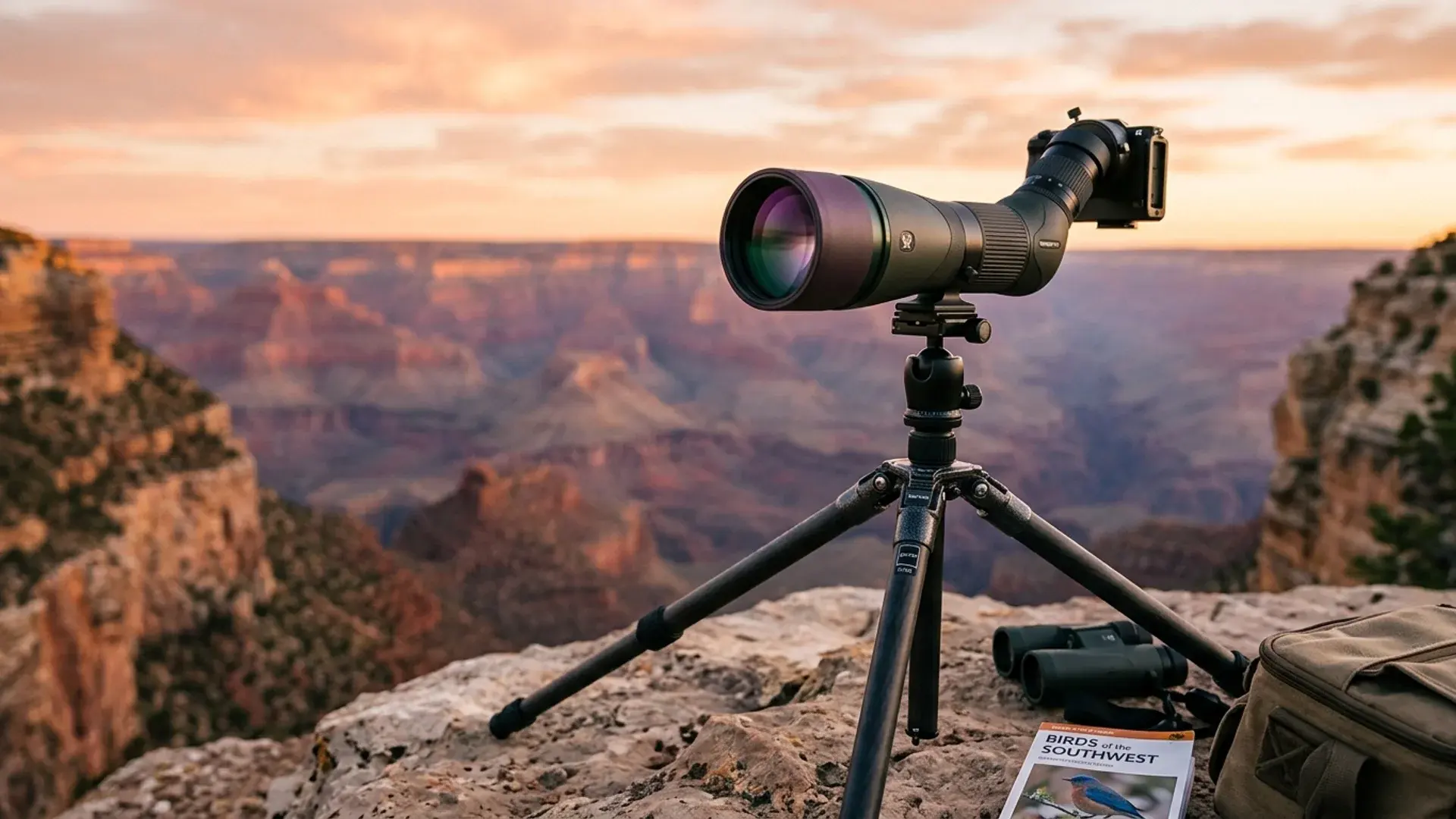
Editorial illustration: the cover is AI-generated and does not depict a specific model.