
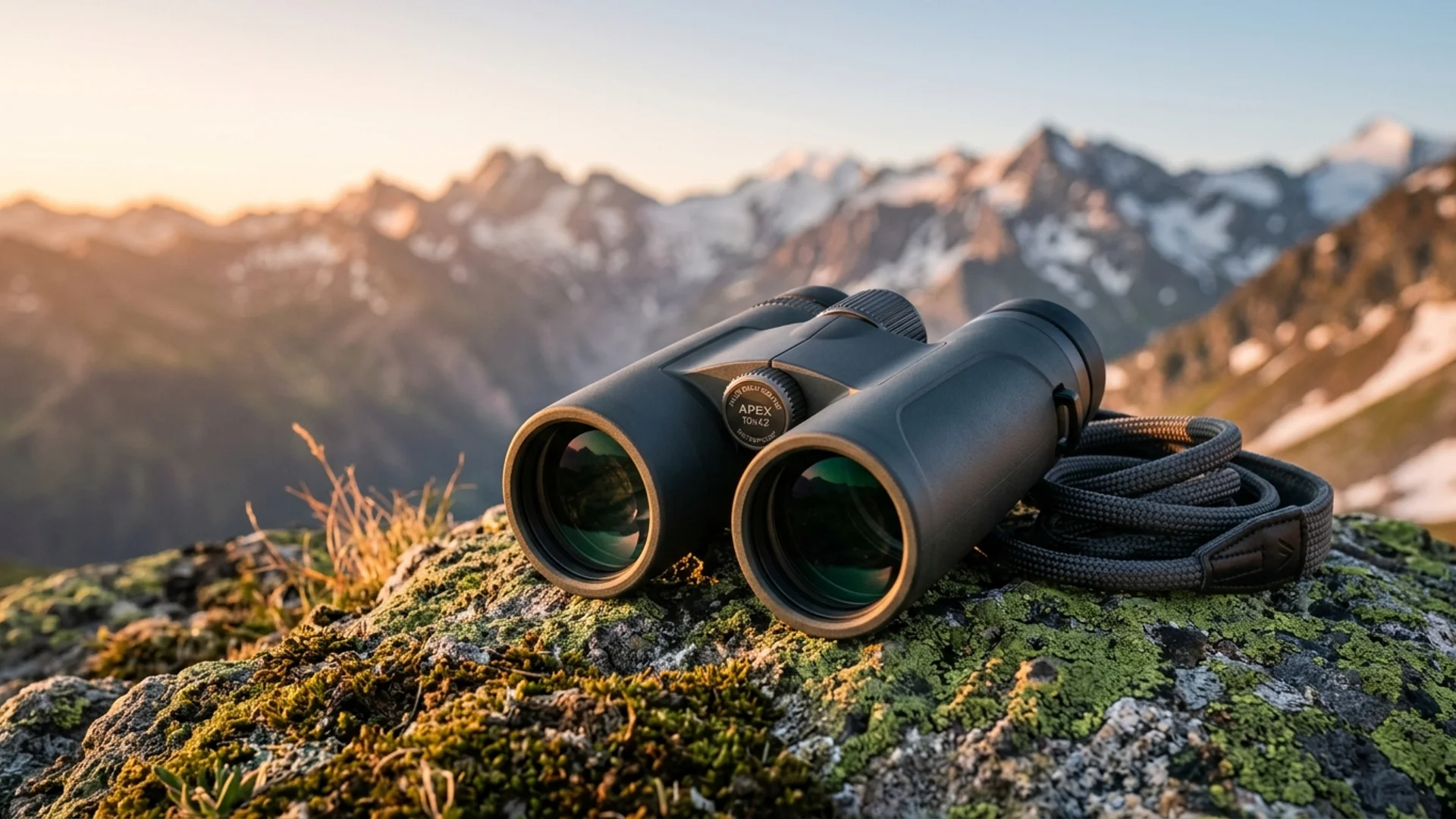
A bird appears between two branches, pauses for a moment, and disappears. On a mountain trail, a distant ridge gives you more time to look. These are different viewing situations, and they help explain why the choice between 8x and 10x binoculars is about more than bringing a subject closer.
For a first pair used on mixed walks, consider 8x as a starting point. For deliberate observation across open ground, consider 10x. These are practical starting points, rather than rules: the right choice depends on the specific model and how comfortably you can use it.
What do 8x and 10x mean?
The first number is magnification. An 8x binocular makes a subject appear eight times its unaided apparent size; 10x makes it appear ten times. The second number in a specification such as 8x42 is the objective lens diameter in millimeters.
Moving from 8x to 10x increases apparent image size by 25%, but it does not automatically increase the detail you can actually distinguish by the same amount. Optical quality, focus, and steadiness also matter. Nikon explains that increasing magnification makes hand movement more noticeable. Nikon's magnification guide
Compare the trade-offs
| What matters | 8x binoculars | 10x binoculars |
|---|---|---|
| Apparent subject size | Smaller than 10x | 25% larger than 8x |
| Handheld steadiness | Less apparent shake at the same hand movement | Hand movement is more noticeable |
| Field of view | Often wider within a comparable product family | Often narrower; check the actual specification |
| Exit pupil with a 42 mm objective | 5.25 mm | 4.2 mm |
| A useful starting point | Mixed walks and nearby moving subjects | Deliberate viewing across open spaces |
The table is a comparison of magnification, not a ranking of every binocular. A wide-angle 10x model can have a wider field than a different 8x model. Always compare the published field of view at the same distance. A wider view can help you find and follow birds. Nikon's field-of-view guide
Think about your usual outing
Imagine your next three trips. Will you be walking wooded paths, watching birds around a park, or stopping to inspect a distant shoreline? Write down the setting you visit most often.
For mixed outings, try an 8x pair and ask whether you can raise it quickly and keep the subject in view. For an open landscape, try 10x and ask whether the larger image stays steady enough to be useful. Both magnifications fall within Nikon's suggested range for woodland birdwatching. Nikon's birdwatching guide
Do not choose according to the most demanding trip you might take once a year. Choose according to the binoculars you will want to carry on an ordinary weekend.
Understand exit pupil without overestimating it
Exit pupil is objective diameter divided by magnification. With the same 42 mm objective, an 8x model has a larger exit pupil than a 10x model.
That can matter in dim conditions, but exit pupil alone does not tell you which binocular will look brighter in every situation. Your eye's pupil and the instrument's optical performance also affect the result. In daylight, a larger exit pupil may not deliver a visibly brighter view. Nikon's exit-pupil guide
Check comfort before deciding
If you wear glasses, check eye relief and how the eyecups adjust. The important question is whether you can see the full field comfortably, without forcing your eyes too close to the eyepieces. Nikon describes eye relief as the distance from the eyepiece to the position where the full view is visible. Nikon's eye-relief guide
Make a shortlist of two or three models. Compare their weight, dimensions, field of view, eye relief, and weather-protection specifications. If possible, try each one while looking at the same subject. A comfortable grip and an easy focus wheel can decide which pair becomes a regular companion.
Explore binoculars at Expert Binocular, or ask our team for help comparing models.
Frequently Asked Questions
Are 10x binoculars always better than 8x?
No. They produce a larger apparent image, but also make hand movement more noticeable. Choose according to your viewing conditions and comfort.
Does every 8x binocular have a wider field than every 10x binocular?
No. Field of view also depends on the optical design. Compare the actual specifications of the models on your shortlist.
Is 8x42 brighter than 10x42?
It has a larger calculated exit pupil. That can help in dim conditions, but does not guarantee a brighter view across every model and lighting condition.
Which should I try first for mixed outdoor walks?
An 8x pair is a reasonable starting point. Compare it with 10x on the same subject before making your decision.