Spotting Scope Zoom Eyepieces: A Compatibility Checklist
Expert Binocular Team
November 15, 2026
5 min read
A spotting scope's eyepiece determines how you look into the instrument and, together with the scope body, affects the magnification and field of view. Some scopes have a built-in zoom eyepiece; others accept a separate eyepiece made for a particular mount. Before buying a replacement or comparing specifications, identify the complete combination rather than judging by a number on the eyepiece alone.
This checklist explains the questions to ask when comparing a zoom eyepiece with a fixed-magnification option. It does not assume that components from different brands or product families fit one another. Confirm compatibility with the manufacturer or retailer for your exact scope body.
Check whether the eyepiece is removable
Start with the scope's manual and product information. An integrated eyepiece may be part of the instrument rather than an interchangeable accessory. For example, Nikon describes the zoom eyepiece on its PROSTAFF 3 Fieldscope as integrated. That feature applies to that model and should not be assumed for every spotting scope.
If the eyepiece is interchangeable, identify the scope's full model name and the manufacturer's specified mount. Matching a brand name is not enough: a manufacturer can use different mounts or exclude certain combinations. Do not force an eyepiece into a socket that is not explicitly listed as compatible.
Read what is included with the scope. A body and an eyepiece may be supplied together or separately depending on the product and package. Check the current listing and ask the seller if the description is unclear; a photograph alone may not show which parts are included.
Read magnification for the combination
A fixed eyepiece provides one stated magnification with a given scope. A zoom eyepiece provides a range, allowing the observer to change magnification within that range. Depending on the optical system, the same interchangeable eyepiece can produce different figures with different compatible scope bodies.
Nikon's fieldscope guide explains that the magnification and real field of view of an eyepiece can vary with the attached fieldscope. Use the specification table for the exact scope-and-eyepiece pairing. Do not assume that a figure printed for one body is valid for another.
A higher number is not the only useful measure. Higher magnification can make small movements more noticeable and make it harder to locate a subject. A stable support, clear sightline and suitable viewing conditions matter. Atmospheric shimmer, distance and light can limit the detail visible even when an instrument offers more magnification.
Compare field of view at the same setting
Field of view describes how much of a scene is visible through the instrument. Manufacturers may state it as an angle or as a width at a specified distance. Compare like units and the same distance, and note the magnification at which each figure was measured.
A wider view can make it easier to find and follow a moving subject; a narrower view can place more emphasis on a smaller part of the scene. A zoom eyepiece's field can change across its range, so look for values at both ends when they are published.
Nikon's comparison of fixed and zoom eyepieces illustrates differences for its own examples. It should not be treated as a universal ranking of every eyepiece on the market. Compare the actual specifications of the models you are considering.
Consider eye relief and eyecup adjustment
Eye relief is the distance from the eyepiece at which the observer can see the intended field. This can be especially relevant for people who wear glasses. Check the stated eye relief for the complete setup and, for a zoom, whether the value changes through the range.
Eyecups may twist, slide or fold depending on the design. Follow the instructions and choose a position that lets you see the field comfortably without pressing hard against the instrument. If possible, evaluate the fit while wearing the glasses or protective eyewear you actually use. A published number helps narrow choices, but comfort also depends on individual fit.
Check handling, weather and care
Confirm how the scope is supported and how the eyepiece locks into place. Follow the manual when attaching or removing a compatible eyepiece, keep caps available, and protect exposed surfaces from dust and moisture. Do not touch glass unnecessarily or use an unapproved cleaner.
Water resistance can apply to a particular assembled configuration rather than to each detached part. Nikon's MONARCH eyepiece information distinguishes its protected mounted assembly from the eyepiece alone. Check your own manufacturer's instructions before relying on any weather rating.
For practical support considerations, see the store's spotting scope tripod setup guide. Never look at the Sun through a scope unless the equipment is specifically designed and properly equipped for safe solar viewing.
Make a short comparison list
Write down the scope body, mount, included parts, magnification range, field of view, eye relief and weight for each compatible combination. Add your main use: following birds, observing a fixed distant subject or carrying equipment between locations. This makes it easier to compare complete setups without assuming that the most powerful option is automatically the best fit.
Frequently Asked Questions
Will any eyepiece fit my spotting scope?
No. Some scopes have integrated eyepieces, and interchangeable designs require an explicitly compatible mount.
Does a zoom eyepiece have one fixed field of view?
No. Its field can change with magnification. Check the manufacturer's values for the complete setup.
Is a detachable eyepiece always waterproof by itself?
No. Weather protection can depend on the assembled configuration. Consult the exact product instructions.
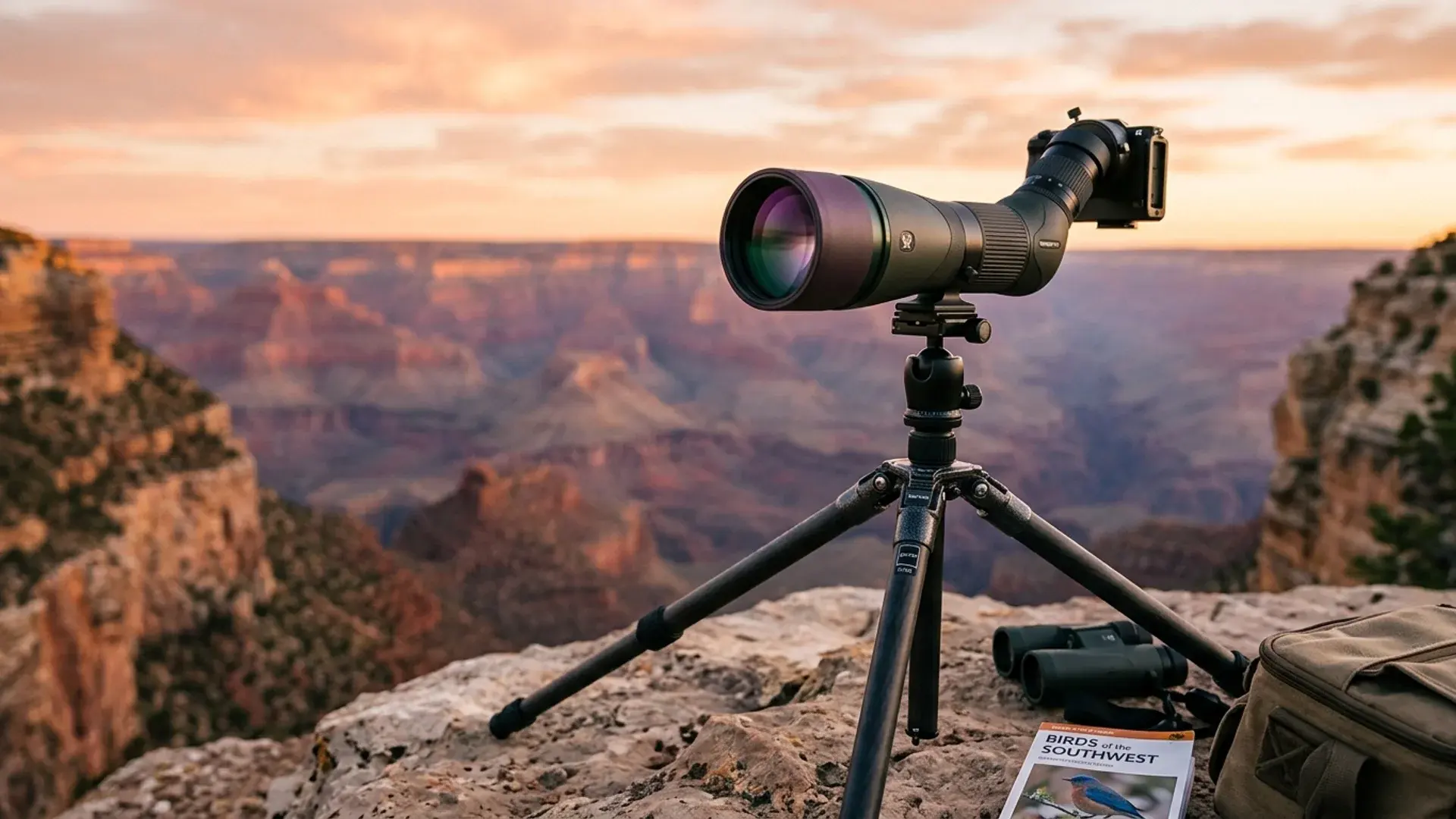
Editorial image: AI-generated still life of generic optical equipment, not a specific product or a claim that the parts fit together.