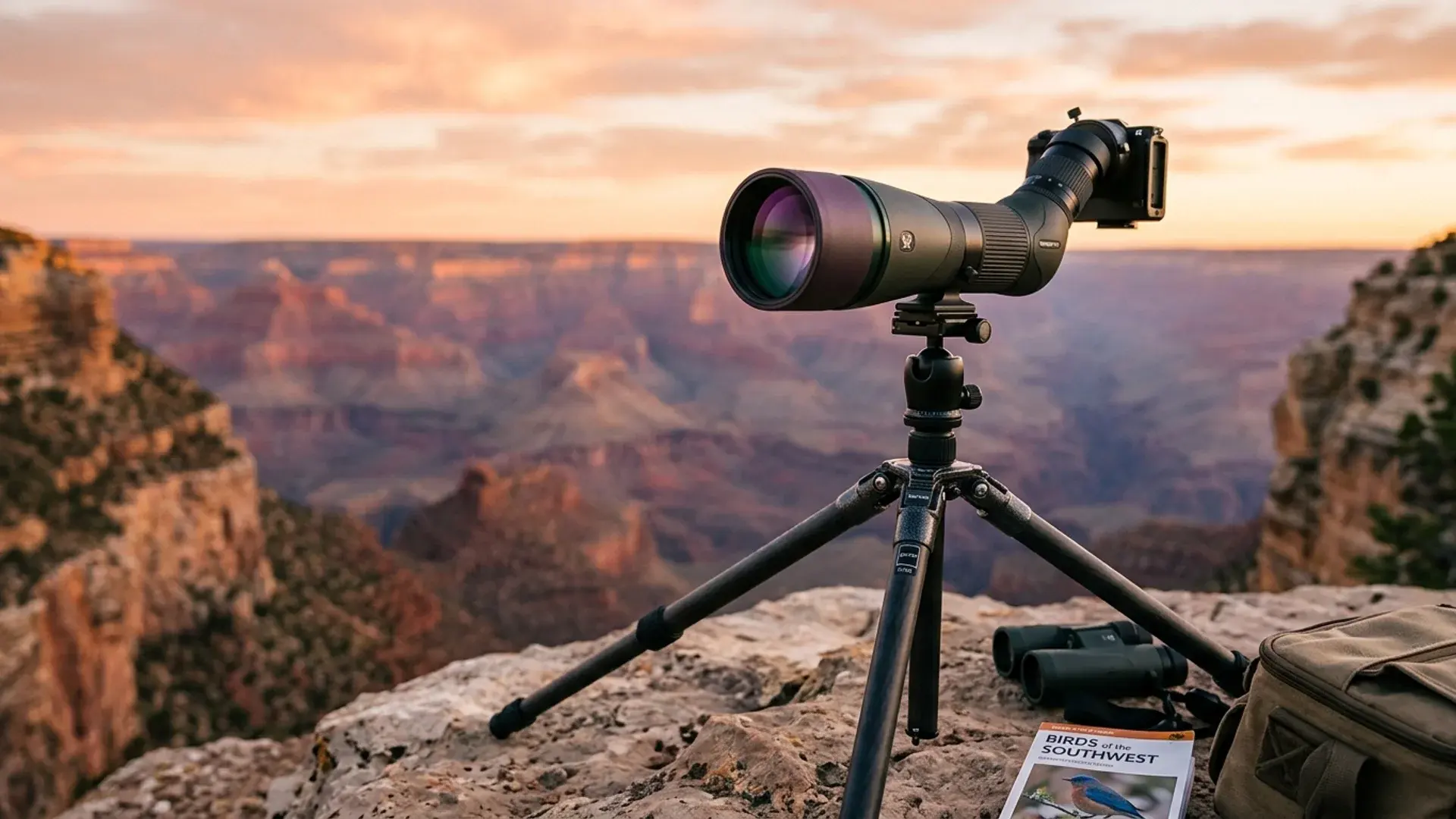
A spotting scope can bring distant birds, landscapes or other subjects into closer view. When comparing models, one practical choice is whether the eyepiece points straight back or sits at an angle to the body. Both layouts can be useful; the better fit depends on where you observe, how you support the scope and who shares it.
This guide focuses on eyepiece position and handling. Do not assume that the shape alone tells you a scope's magnification, optical quality or compatibility with a tripod. Check the manufacturer's specifications for each model and follow its mounting instructions.
What changes between the two layouts?
On a straight scope, the eyepiece is in line with the body. You generally look forward along the scope's direction. On an angled scope, the eyepiece is set at an angle, so you look down or across into it while the objective points toward the subject.
Celestron's guide to straight and angled spotting scopes explains that the difference is in the optical layout. It also describes how an angled eyepiece can allow a lower tripod position. Those descriptions do not mean that every scope in either category has the same optical performance or physical dimensions.
Think about how you find a subject
With a straight scope, the direction you look is closer to the direction in which the scope points. Some observers find that arrangement intuitive when moving from an unaided view to the eyepiece. An angled scope places the eyepiece elsewhere, so it can take practice to aim and locate a subject.
Whichever design you choose, start with a stable, securely mounted setup and follow the manufacturer's instructions. If the scope has a zoom eyepiece, a lower magnification can make the initial search easier because it may provide a wider field. Confirm the actual field of view for the model and setting in its specifications.
Do not point any spotting scope at the sun. Direct solar viewing through an optical instrument can cause severe eye injury. Use the instrument only as directed by its manufacturer.
Check tripod height and viewing position
Picture yourself standing, sitting or kneeling at the places where you plan to observe. With an angled eyepiece, the scope can often be positioned lower than eye level and viewed from above. A straight eyepiece may need a different tripod height to reach a comfortable position. The practical height also depends on the head, scope and observer.
Measure the tripod's working height with its head and the scope's mounting position in mind. A tripod must be stable and rated for the equipment it supports. Avoid extending or loading it beyond its manufacturer's limits. Our spotting scope tripod setup guide covers the separate mounting checks.
Try the arrangement if possible. A viewing position that works for a short look may feel different during a longer session, and comfort varies with the user's height and mobility.
Consider shared viewing
If adults and children of different heights will share one scope, an angled eyepiece may make the view easier to reach without raising the tripod as often. Some angled models also have a rotating mounting collar that changes the eyepiece position while the scope remains pointed toward the subject. Celestron describes this feature in its guide, but it is not present on every model.
Check the product listing or manual for a rotating collar and its locking method. Support the scope during adjustments and make sure the collar and tripod head are secured before letting go. Do not loosen a mount while a person is positioned where falling equipment could cause injury.
A straight scope can also be shared; plan for any tripod height adjustments the group will need. The right arrangement is the one everyone can use comfortably and safely.
Match the scope to the place
Think about whether you usually observe from a standing tripod, a low seat, a table or an approved window mount. Each situation puts your eye and the support at a different height. Vortex's comparison of straight and angled scopes discusses how handling and packing can differ between layouts.
Before using a window mount or other support, check that the scope and mount are compatible and that the setup is stable. Never use optical equipment while operating a moving vehicle. Follow local rules and observe wildlife without disturbing it.
Compare the complete specifications
Once you have a preferred layout, compare magnification, objective size, field of view, eye relief, weight and weather protection for the individual models. Check whether the eyepiece is included, whether it can be changed and what accessories are required. A scope's body shape alone does not answer these questions.
If possible, test both layouts with the tripod and viewing posture you expect to use. For further selection questions, read our spotting scope birdwatching guide.
Frequently Asked Questions
Is an angled scope always optically better?
No. Eyepiece angle alone does not establish optical performance. Compare the specifications and design of the individual models.
Does every angled scope have a rotating collar?
No. Check the manufacturer's description and manual for that feature.
Can I use either design on any tripod?
No. Confirm the mounting connection, load rating and stability of the complete setup before use.
Editorial note: the featured image is AI-generated and does not depict a specific spotting scope model.