
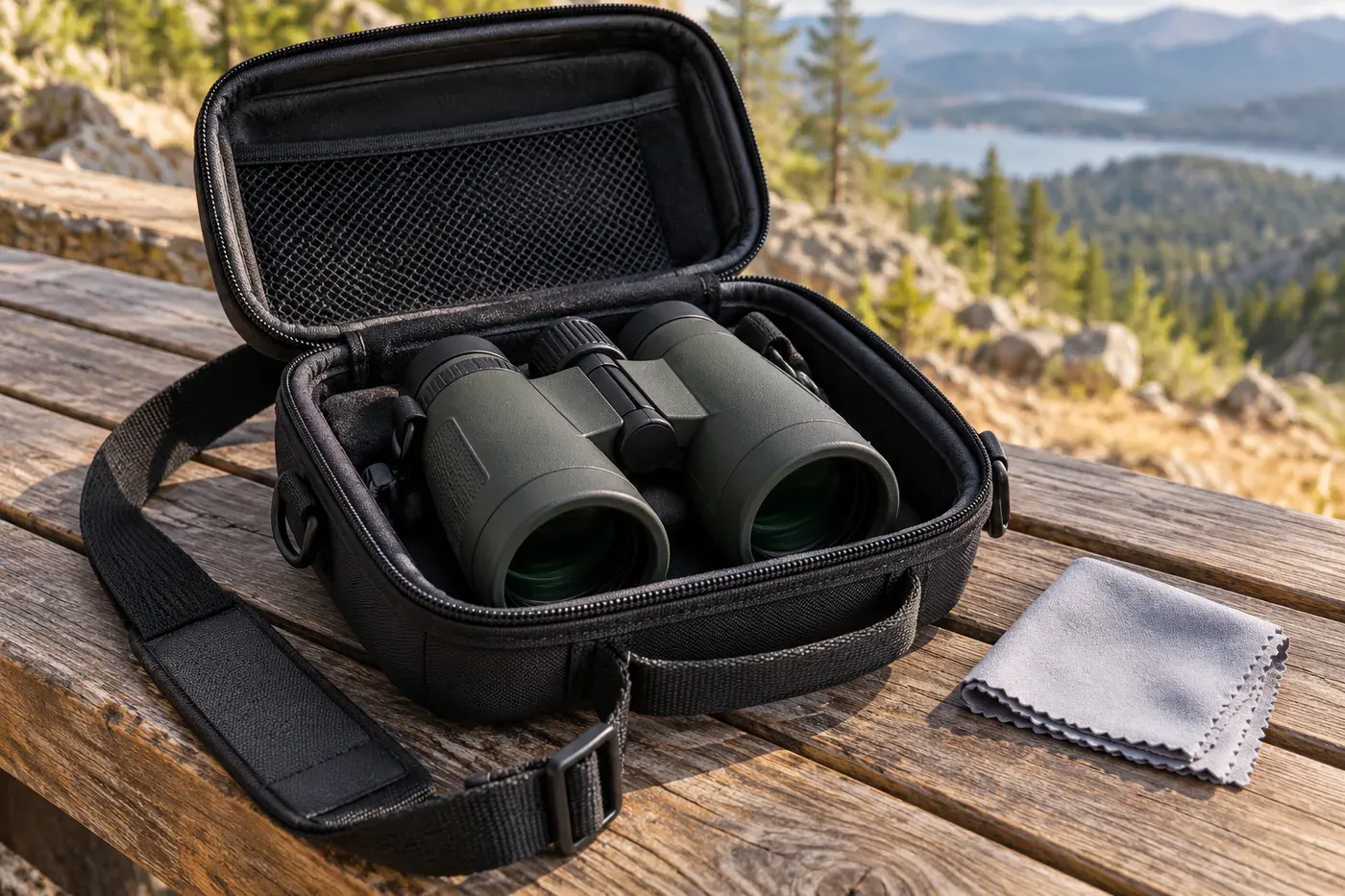
A binocular case and strap make it easier to carry your optics on a birding walk, but they are only part of a good care routine. Before you leave, check the attachment points, lens protection and fit. After the outing, deal with moisture before putting the equipment away. This guide helps you prepare a practical binocular field kit without assuming every model has the same instructions.
Start with your exact binoculars
Find the model name and the manufacturer's instructions. Note whether the supplied accessories include a neck strap, harness, objective covers, eyepiece cover and case. Check how each part attaches and whether the manufacturer recommends a specific way to carry or store it. Keep the manual link on your phone or with your equipment notes.
Look for the exposure limits for your exact model. Waterproof and fogproof descriptions do not mean every instrument can be soaked, dropped or stored wet. Nikon's binocular precautions discuss shock, moisture and storage; use the guidance supplied by your own manufacturer when it differs.
Check the strap before leaving
Inspect the strap fabric, stitching, buckles and attachment points. Thread the strap as the maker instructs and confirm that each end is secure before lifting the binoculars. If a connector or strap is damaged, stop using it and obtain a suitable replacement rather than trusting a temporary knot.
Adjust the length so the binoculars are easy to raise while you are standing and walking. A neck strap and a body harness distribute weight differently; choose the arrangement that fits your own body and outing. Practice raising the binoculars without tangling the strap, and make sure the instrument cannot swing into a hard object when you bend down.
Choose a case for transport
Use a case that fits the binoculars and their attached covers without forcing the zipper or pressing hard on the focusing controls. Check the padding, closure and attachment points. If the case has a shoulder strap, inspect it separately. A case can help protect equipment during transport, but it cannot guarantee protection from a hard impact or water.
Keep keys, metal tools and other hard objects in a separate pocket so they cannot rub against the binocular body or lens surfaces. Nikon advises protecting binoculars from strong impacts because shock can affect their optical alignment. Secure the packed case where it will not fall when a vehicle door opens or a bag is lifted.
Pack lens protection and care supplies
Carry the covers provided for your model and use them as the manufacturer recommends. Keep a clean lens-care cloth or tissue in its own protective pouch, and include an appropriate soft brush if your maker recommends one. A cloth contaminated with grit can make a problem worse, so keep cleaning supplies separate from food, sand and damp clothing.
Before cleaning a lens, read the specific instructions. Nikon recommends removing dust or sand with a soft oil-free brush and handling marks gently with suitable lens-cleaning materials. Other manufacturers may specify different products or procedures. Avoid improvising with rough fabric or household cleaners, and do not disassemble the optics.
Plan for rain and temperature changes
Check the forecast and the protection rating for your binoculars before the outing. Bring a dry place to put the case and keep a clean dry cloth available for the exterior. If the equipment gets wet, follow the model's instructions for wiping and drying it before storage. Nikon notes that sudden temperature changes can produce condensation and recommends allowing affected binoculars to dry naturally until the fog is gone.
Never seal a damp instrument in its case for long-term storage. Nikon cautions that humidity and condensation can encourage mold and recommends a cool, dry storage approach. If moisture appears inside the optics, persists, or follows an impact, consult the manufacturer or an authorized service provider rather than opening the instrument yourself.
Prepare a simple field checklist
Before departure, confirm the binoculars, securely attached strap, appropriate covers, case and model-approved cleaning supplies. Check that zippers and buckles work, and set the eyecups and strap for the people who will use them. Make a note of any existing damage so you can monitor it after the trip.
After returning, inspect the exterior, follow the maker's cleaning and drying directions, and store the binoculars in conditions suitable for that model. Never look directly at the sun through binoculars; Nikon warns that doing so can seriously damage eyesight. For more viewing and buying tips, visit the Expert Binocular blog.
Frequently asked questions
Can I store wet binoculars in their case?
Dry the instrument according to its manufacturer's instructions before storage. Moisture trapped in a case can contribute to condensation or mold.
Is a waterproof binocular safe from all damage?
No. Check the exact model's exposure limits, protect it from impact and follow the manufacturer's care instructions.
Source: Nikon Sport Optics Guide, Precautions. The cover is an AI-generated editorial illustration, not a specific binocular model.