
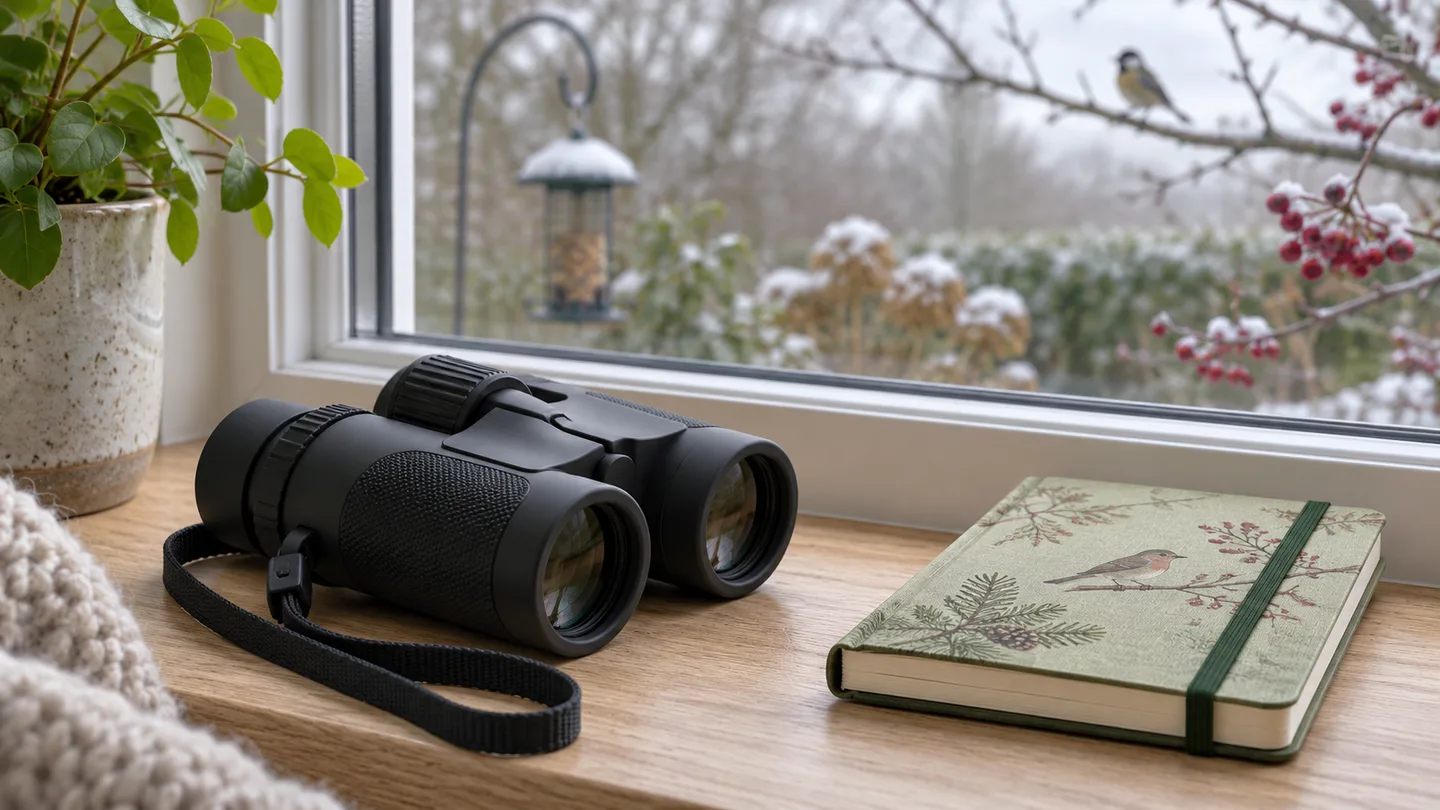
A familiar window can be a useful place to learn how to find and follow birds with binoculars. You can keep a notebook nearby, observe the same patch in different weather and practice without carrying equipment far from home. The view also comes with its own challenges: reflections, window screens and the distance between you and the subject can all change what you see.
This guide focuses on using binoculars you already have. It does not promise that a particular window, feeder or optical specification will produce a certain result. Keep your setup comfortable, follow the equipment maker's instructions and put bird safety first.
Choose a comfortable observing position
Start by identifying the area you can see clearly while sitting or standing comfortably. Look for a position where your hands can reach the binoculars without leaning awkwardly against glass. A stable chair and a nearby table can make longer observation sessions easier.
Compare the view at different times of day. Glare from a lamp behind you or bright outdoor light on the window may create reflections. Turn unnecessary interior lights off when practical, or shift your position to see whether the reflection moves out of the way. Avoid pressing binocular eyecups against glass: the goal is to keep the instrument comfortable and secure.
If a window opens, use it only when it is safe to do so and when the weather and household situation permit. Keep the instrument away from a ledge where it could fall, and follow its care guidance if moisture or dust is present. Do not lean out of an upstairs window to get a better angle.
Understand what the window changes
Window glass is made for a building, not as part of the binocular's optical system. Reflections, dirt, condensation, screens and multiple panes may make a view less clear. Before blaming the instrument, compare a distant object through different clean parts of the window and, if safe, from an unobstructed position.
Use a window-cleaning method appropriate for the window itself. Do not transfer household glass cleaner to binocular lenses: optical coatings need the care described by the instrument's manufacturer. If the binocular lenses need attention, consult the Expert Binocular lens-cleaning guide and the instructions supplied with your model.
Temperature and humidity changes can also affect equipment handling. When moving optics between a cold room or outdoors and a warmer indoor area, follow the manufacturer's advice for drying and storage. Never put an instrument away wet or attempt to clean internal optical surfaces yourself.
Find the bird before raising the binoculars
Look for movement with your unaided eyes first. Note a landmark near the bird, such as a branch junction or the edge of a roof. Keep your attention on that point while bringing the binoculars up to your eyes, then adjust the center focus gently until the subject is clear.
If you lose the bird, lower the binoculars and find the landmark again. Sweeping randomly at high magnification can make a small moving subject difficult to locate. Nikon's binocular selection guide explains that higher magnification generally gives a narrower real field of view and makes hand movement more noticeable. Compare the actual specifications of the instruments you use rather than assuming a larger number is always easier.
Set the hinge and diopter for your own eyes before the session. If you share binoculars, the next person may need a different adjustment. Our focus and diopter guide walks through the basic setup; use the instructions for your particular model where they differ.
Support the view without crowding the glass
Rest your elbows on a stable surface or support your arms against your body. Keep the binoculars in your hands rather than balancing them on an unstable sill. If you use a tripod, confirm that the instrument and adapter are compatible and that the legs are secure and out of the way.
For a short practice session, choose a stationary outdoor object first, focus carefully and relax your grip. Then try following a moving bird as it travels between familiar landmarks. Take breaks if your arms or eyes become uncomfortable. A steadier position may be more useful than trying to magnify every detail.
Keep a simple observation record
Write down the date, approximate time, weather and where in the view you saw the bird. Record visible features such as size relative to a familiar species, colors, movement and calls you can describe. A sketch or a few short notes can help you compare a sighting with a reliable field guide later. If you cannot identify a bird confidently, leave the identification open.
Respect local wildlife guidance if you add a feeder or water source. Place and maintain it according to advice relevant to your area, and avoid disturbing nests or approaching birds for a closer look. Never look at the Sun through binoculars; serious eye injury can occur.
Frequently asked questions
Can I observe through a closed window?
Yes, but glass, screens and reflections can reduce clarity. Compare positions and clean the window safely before judging the binoculars.
Does higher magnification always help?
No. Nikon notes that higher magnification can narrow the field of view and make hand movement more noticeable.
What if I cannot identify a bird?
Record the features you can see and check a trusted field guide later. An uncertain identification is better left open.
Cover: AI-generated editorial illustration of generic binoculars by a window; not a photograph of a specific product.