
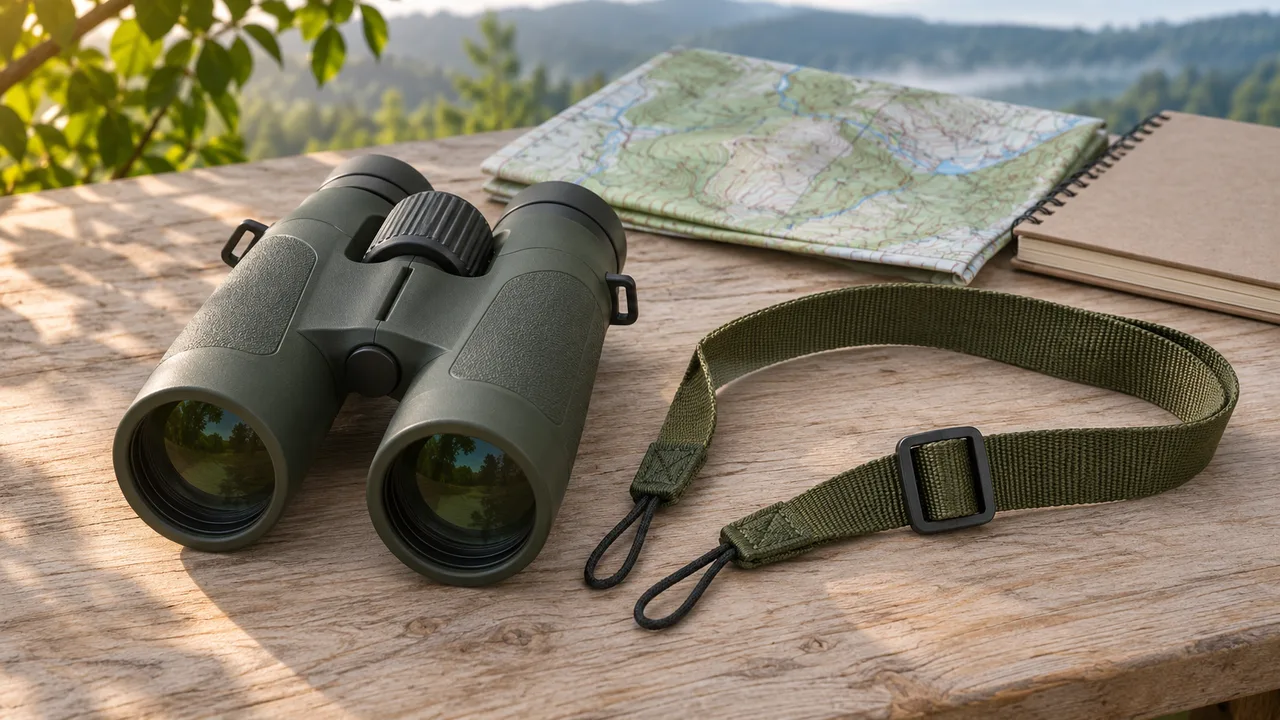
A binocular strap is easy to overlook until a buckle slips or the eyepiece cover gets in the way. A few minutes spent checking the attachment points, strap routing and length can make a field kit easier to carry and help prevent an avoidable drop.
This guide is a general checklist, not a replacement for the instructions supplied with your binoculars and strap. Attachment systems differ. Work over a soft, clear surface, keep a hand on the binoculars while checking them and stop if any part appears damaged.
Find the correct attachment points
Start with the manual for your exact binocular model. Identify the designated strap eyelets, any supplied clips and the correct way to secure the free ends. Do not assume that every opening on the body is intended to carry the binoculars, or that a strap from another model will fit.
For example, the ZEISS CONQUEST HDX instructions describe attaching the carrying strap through the binoculars' strap eyelets and adjusting its length. They also illustrate how the eyepiece cover can be included in that particular setup. Use the diagrams for your own equipment: the sequence and hardware are not necessarily interchangeable.
Lay the binoculars, strap and any protective covers on a table. Check that you can identify the left and right attachment points and that the strap is not twisted before you begin. Keep small clips away from the edge of the table.
Inspect the webbing and buckles
Look along the whole length of the strap for fraying, cuts, worn stitching or material that has become stiff or brittle. Examine buckles and quick-release parts for cracks, distortion or missing pieces. A buckle that looks sound at a glance may still be unsuitable if the webbing can slip through it.
Check the binocular eyelets and any supplied attachment loops too. If an eyelet is loose, cracked or deformed, contact the manufacturer or a qualified service provider. Do not improvise a repair with tape, adhesive or an unrelated fastener and assume it will hold the binoculars.
If you are replacing a strap, confirm that it is compatible with the attachment points and the weight of your equipment. Follow the strap manufacturer's limits and instructions; a wide pad alone does not establish whether its connectors are suitable.
Follow the threading diagram
Route each end through the correct eyelet and buckle as shown by the manufacturer. Pay attention to the direction of the webbing and whether the instructions require it to pass back through an adjuster. Leave the amount of free end specified in the instructions; avoid cutting it shorter to make the setup look neater.
Some systems use a separate connector or a quick-release buckle instead of a simple threaded strap. Make sure each component engages in the way its maker describes. If you cannot match the diagram to the hardware in front of you, pause and seek guidance rather than guessing at the route.
Keep a hand beneath the binoculars while making adjustments. Once both sides are connected, gently check each attachment over the padded surface. Do not swing or drop the binoculars to test the strap.
Set a comfortable carrying length
Adjust the strap so the binoculars sit where you can reach them without striking other equipment. The right length depends on your height, clothing, carrying style and activity. Try the adjustment with the jacket or layers you expect to wear, then raise the binoculars to your eyes while supporting their weight with your hands.
A longer strap can be convenient for access but may allow more movement as you walk. A shorter one can bring the binoculars closer to the body but may be uncomfortable with bulky clothing. Choose a position that lets you move normally and keep the equipment under control.
For longer walks, a compatible harness may be another option. Check its connectors and instructions in the same way, and make sure it does not obstruct a backpack strap or restrict your movement.
Check caps and field access
If your eyepiece cover attaches to the strap, confirm which side it should sit on and whether you can remove and replace it without pulling on the connection. Some covers can be carried on one side; follow the instructions for your model rather than forcing a cover onto a connector that does not fit.
Open and close any objective covers while holding the binoculars securely. Check that the strap does not catch in a hinge, cover or case zipper. Before leaving, pack the binoculars in a suitable case and keep the strap from tangling around items that could scratch the lenses.
Recheck before each outing
Before carrying the binoculars, look at both attachment points and lightly check the webbing for movement through the buckles. Recheck after changing strap length, swapping covers or transferring the binoculars to a harness. If anything moves unexpectedly, support the binoculars and correct the setup before continuing.
For related preparation, see our binocular field kit checklist. A secure, compatible strap and a repeatable inspection are more useful than assuming yesterday's adjustment is still correct today.
Frequently asked questions
Can I use any camera strap with binoculars?
Only if its connectors and stated capacity are compatible with the binoculars. Check both manufacturers' instructions before fitting it.
Should I trim the loose strap ends?
Follow the maker's guidance. Trimming can leave too little webbing for the required buckle route or later adjustments.
How often should I inspect the strap?
Check it before an outing and again after changing the setup. Replace or have damaged parts assessed according to the manufacturer's guidance.
Cover: AI-generated editorial illustration of generic binocular equipment; not a photograph of a specific product.