
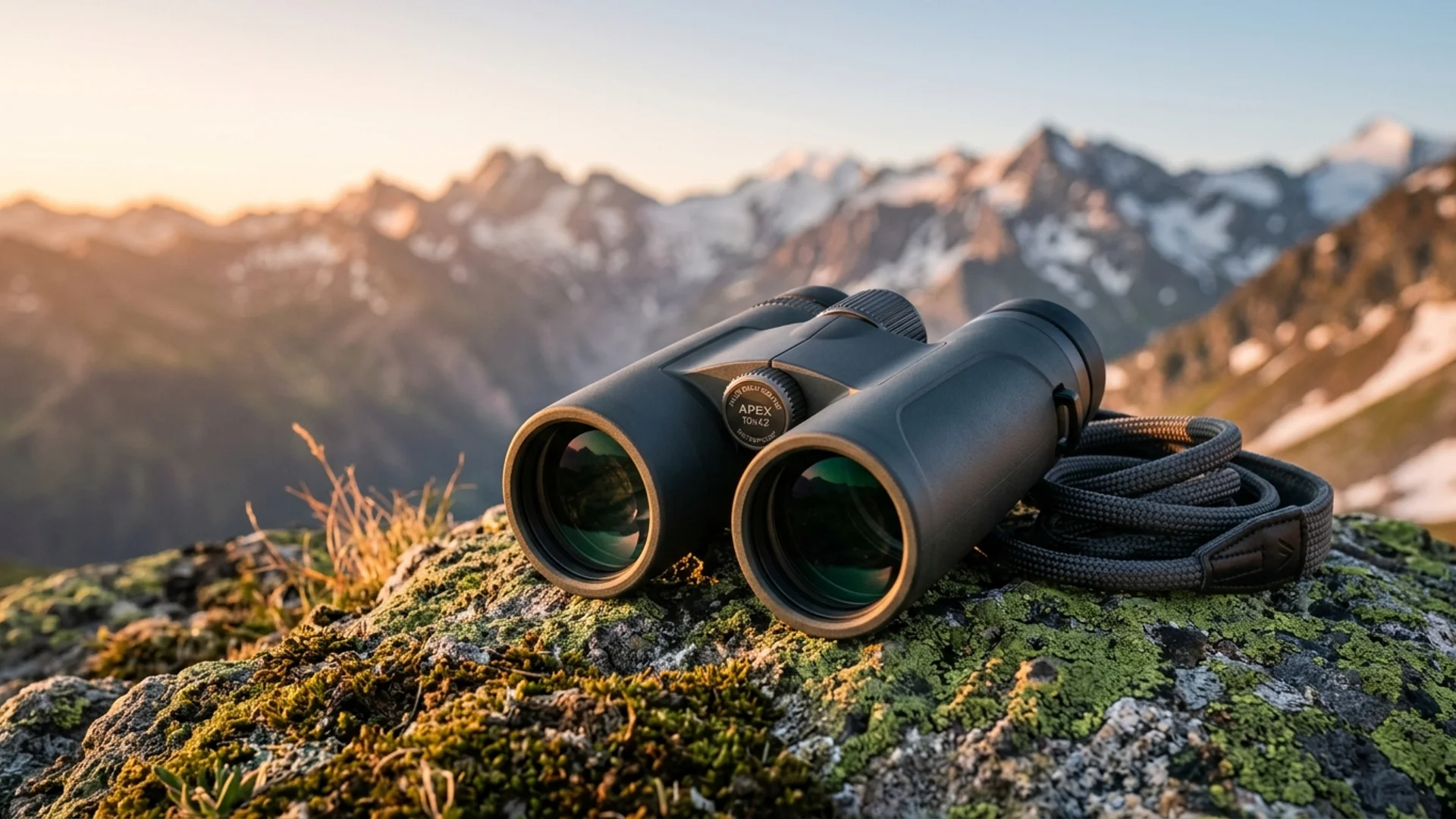
A dusty trail, a fingerprint on an eyepiece, or a damp morning can leave you wondering how to clean binocular lenses safely. The useful habit is to work in stages: inspect the surface, remove loose particles, then deal with remaining marks using products intended for your optics.
This guide covers external lens care. Your binocular manufacturer's instructions take priority, especially for cleaning fluids, water exposure, and the rubber housing. A general cleaning routine cannot tell you whether a particular model can be rinsed.
Prepare a small lens-care kit
Keep a hand-operated lens blower, a soft optical brush, a clean lens microfiber cloth, and a compatible lens cleaner or packaged lens wipes together. These tools have different jobs; a cloth should not be your first response to visible grit.
ZEISS describes its lens cleaning kit as providing a blower for loose dust, a brush for particles, and separate wet-cleaning materials. That is a useful model for organizing your kit, even if you choose other manufacturer-approved supplies.
Before an outing, check that the cloth is clean, the brush has its protective cover, and any liquid bottle is closed. Keep lens-care tools away from muddy footwear and food spills. A sealed pouch is more useful than a loose cloth at the bottom of a backpack.
Step 1: inspect before touching the glass
Find a sheltered place with enough light to see the lens surface. Secure the binoculars and look at both the large objective lenses and the smaller eyepieces. Identify whether you are dealing with loose dust, a greasy mark, or something that appears to be beneath the glass.
Do not start by rubbing everything until it shines. If the surface is already clear, leave it alone. If a mark seems internal, more wiping on the outside will not solve it.
On a windy mountain viewpoint, it may be easier to replace the caps and do the job later. Trying to handle an open bottle, cloth, and binoculars while dust continues to blow around creates an awkward cleaning setup.
Step 2: remove loose particles first
Use the hand blower to move loose dust off the external lens. If particles remain, follow your optical brush's instructions and work gently. Inspect again before bringing a cloth into contact with the surface.
ZEISS's kit description separates blowing and brushing from its wet-cleaning stage. Keep that order in mind when you find sand or trail dust on your optics. Avoid treating a dusty lens as though it were only a fingerprint.
Check the cleaning tool itself as well. If a cloth falls on the ground, set it aside for cleaning rather than using an apparently clean corner.
Step 3: clean remaining smudges gently
Choose a cleaner explicitly suitable for the lens surface, and follow both its directions and the binocular manual. Use the specified application method and light pressure. Work with a clean part of the cloth, then inspect the result before repeating.
ZEISS identifies its lens wipes as suitable for optical surfaces including binoculars. It also explains that the wipes are intended for a single application while moist, and warns against using a sleeve or ordinary tissue as a convenient substitute. See its lens-care guidance.
Do not assume a household glass spray, a screen wipe, and an optical lens cleaner are interchangeable. Read the intended-use label rather than choosing by bottle size or scent. A stubborn mark is a reason to check the instructions again, not to increase pressure.
Step 4: give the housing separate attention
Keep the cloth used for muddy armor separate from the one reserved for glass. Follow the model's cleaning directions for eyecups, exterior surfaces, and water exposure. A waterproof specification does not replace those directions.
For owners of supported models, SWAROVSKI provides manufacturer cleaning demonstrations for CL Pocket and NL Pure binoculars. Look for equivalent guidance for your own model before copying a technique from another instrument.
Finish by checking that the lens-care tools are ready for their next use. Wash reusable cloths according to their supplier's instructions and allow them to dry before packing.
Build a routine around your outings
Before leaving, check the lenses and pack your caps and cleaning pouch. During the walk, keep fingers away from the glass and return the caps when practical. Afterward, inspect the equipment somewhere calm before putting everything away.
Explore optical accessories to plan your setup. If you are still choosing an instrument, our 8x versus 10x binocular guide covers that separate buying decision.
Frequently Asked Questions
How often should I clean binocular lenses?
Inspect them before use and clean when contamination needs attention. Avoid wiping an already clear surface simply to follow a daily schedule.
Can I use my shirt to remove a fingerprint?
Use a clean optical cloth or suitable lens wipe instead. Clothing is difficult to keep free of particles during an outdoor trip.
Can cleaning remove a scratch?
No. A persistent scratch, internal haze, or suspected damage needs advice from the manufacturer or an authorized service provider. Do not dismantle the binoculars to investigate.
Should I rinse my binoculars after a muddy outing?
Only if the instructions for your exact model permit it, using the stated method. Otherwise, ask the manufacturer how to handle that contamination.