The Celestron Nature DX 8x42 is a model to consider for watching birds around a yard, garden or nearby walking route. Its 8x magnification, published 6.5-foot close-focus distance and adjustable eyecups make it relevant to that use. Whether it suits you depends on eye placement, comfort and how easily you can locate a bird through it—not only the specification sheet.
This guide concerns the standard Nature DX 8x42, item 71332. The Nature DX ED is a different version. The advice below draws on manufacturer specifications and birding guidance; it does not describe a hands-on test or rank this model against every alternative.
Match the model to your backyard routine
Think about where you watch from. A chair facing a hedge, a second-floor window and a walk around a large property create different viewing distances and handling needs. Before choosing binoculars, identify a few regular perches you can see comfortably from your preferred position.
For a short session, ease of finding the bird can be more useful than extra magnification. Cornell's beginning birdwatching tips emphasize learning to locate and observe birds, rather than treating equipment as a substitute for practice. Start with a bird that stays in view for a moment instead of one moving rapidly through foliage.
Read the standard model's specifications correctly
Defines the model; does not establish comfort by itself
Field of view
388 feet at 1,000 yards
Helps frame the area you see while locating a bird
Close focus
6.5 feet / 2 meters
Relevant when a nearby perch is close to your viewing position
Eye relief
17.5 mm
A starting point for checking viewing comfort with glasses
Weight
22.2 ounces / 629 grams
Worth assessing during a realistic-length viewing session
Field-of-view figures for the ED version should not be transferred to this model. Similarly, a published eye-relief number does not guarantee that every eyeglass shape will let you see the entire image. Try the actual combination you use outdoors.
Set up the view before searching for birds
First adjust the spacing between the barrels until the two views combine into one comfortable image. Set the eyecups for your eyes and glasses, then follow the supplied instructions to adjust focus and the diopter for your vision. Use a stationary subject while learning these controls.
Dark crescents or a view that keeps disappearing can be an eye-position issue rather than a distant subject that needs more focusing. Cornell's guide to avoiding blacked-out areas explains why barrel spacing and eye placement deserve attention. Make one adjustment at a time so you can tell what improved the image.
If you share binoculars, expect to reset the fit and diopter between viewers. A partner's comfortable setting may make your own view appear poor. Do not evaluate a prospective purchase only with someone else's adjustments still in place.
Use a repeatable find-and-raise routine
Locate the bird with your unaided eyes. Note a nearby fixed feature, such as a fork in a branch or the edge of a fence post. Keep your gaze in that direction while raising the binoculars to your eyes, then focus without losing the reference point.
If the bird leaves, lower the binoculars and find it again before repeating. Sweeping randomly through magnified foliage can make the search harder. Practice on a fixed object first, then a bird on an obvious perch. This routine is an observation exercise, not a claim that a particular model will make every bird easy to follow.
A feeder or planter closer than the model's minimum focus distance may not become sharp from your chosen seat. Move your viewing position farther away rather than assuming something is broken. Avoid moving closer to a bird simply to fill the view.
Check comfort for an ordinary session
During a demonstration, hold the binoculars as you expect to use them. Check whether your fingers reach the focus wheel naturally, whether your glasses remain comfortable and whether supporting the weight becomes distracting. Assess strap adjustment and how you will put the binoculars down safely between sightings.
Cornell's binocular-selection guide is useful for preparing a practical fit check. A sharp view during a few seconds at a counter does not answer every question about your grip or eye placement over time.
Keep observations considerate. The American Birding Association's ethics guidance asks birders to limit disturbance and respect birds, habitat and other people. Watch without approaching nests or pressuring birds for a closer view. Never point binoculars at the sun.
Frequently asked questions
Is this the same as the Nature DX ED 8x42?
No. Confirm the complete name and item number. This guide uses the standard Nature DX 8x42, item 71332, and does not substitute ED specifications.
Can it focus on a feeder next to my window?
Check the distance from your viewing position. Celestron lists a 6.5-foot minimum focus distance for this model; a closer subject may not focus.
Will it work with eyeglasses?
Try the eyecup settings with your own glasses and check whether you see the full image comfortably. The eye-relief specification alone cannot settle fit.
Why do I see dark shapes at the edges?
Check barrel spacing, eyecup position and where your eyes sit before judging optical quality. Use the supplied instructions and seek help if you cannot get a comfortable view.
Is more magnification always better for backyard birds?
No. Finding a bird, keeping the view steady and holding the binoculars comfortably are also important. Compare actual usability rather than magnification alone.
Has this guide tested the binoculars outdoors?
No. It combines published specifications with observation and buying checks. A personal demonstration remains useful before choosing.
Make the product check specific
Review the Celestron Nature DX 8x42 listing at Expert Binocular, confirm the standard version and ask about current availability and demonstration options. Bring your glasses and a short list of typical viewing distances. Those details help turn a general interest in birding into a more useful buying decision.
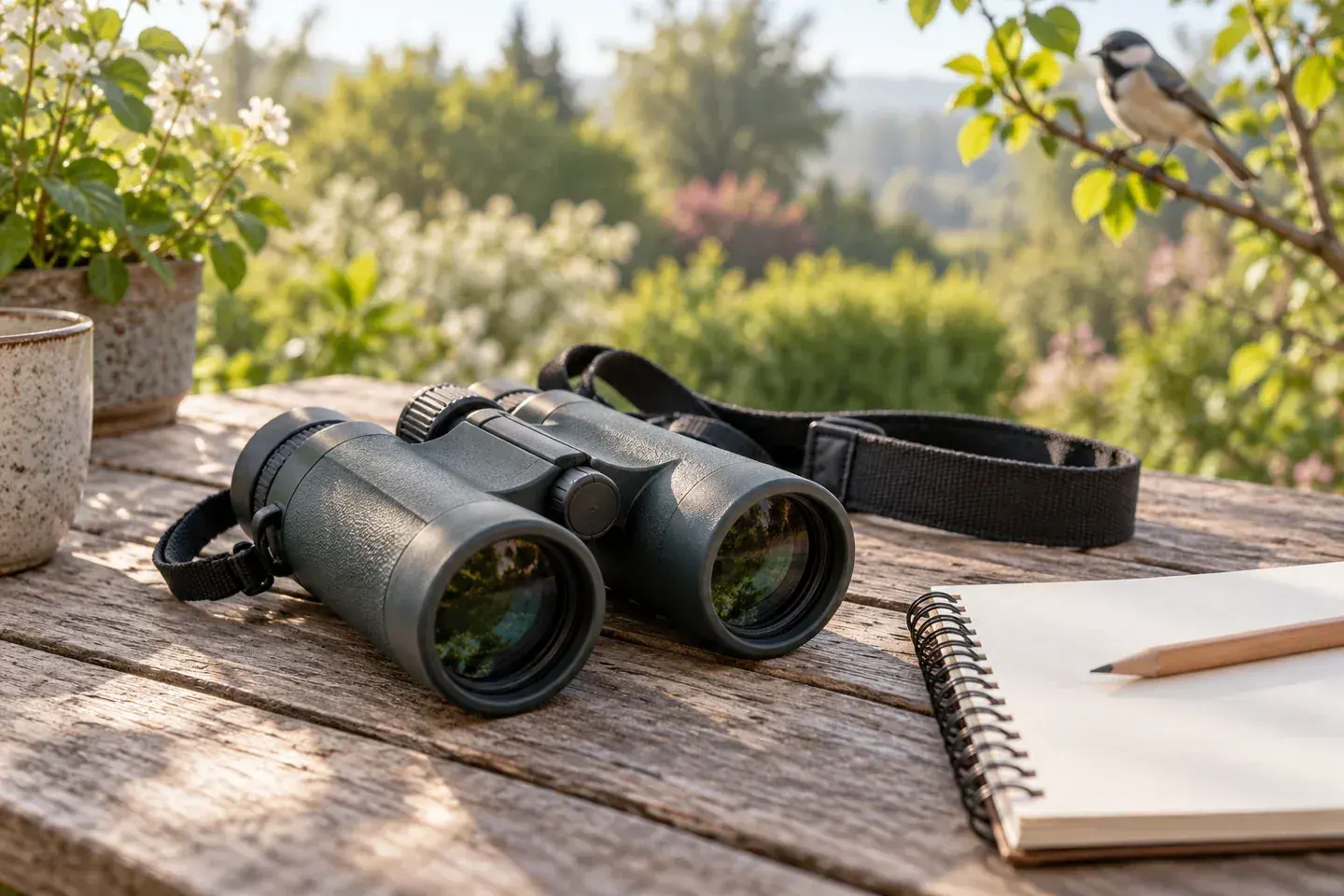
AI-generated editorial illustration: generic binoculars in a garden setting, not a photograph of the Celestron model or evidence of a field test.