
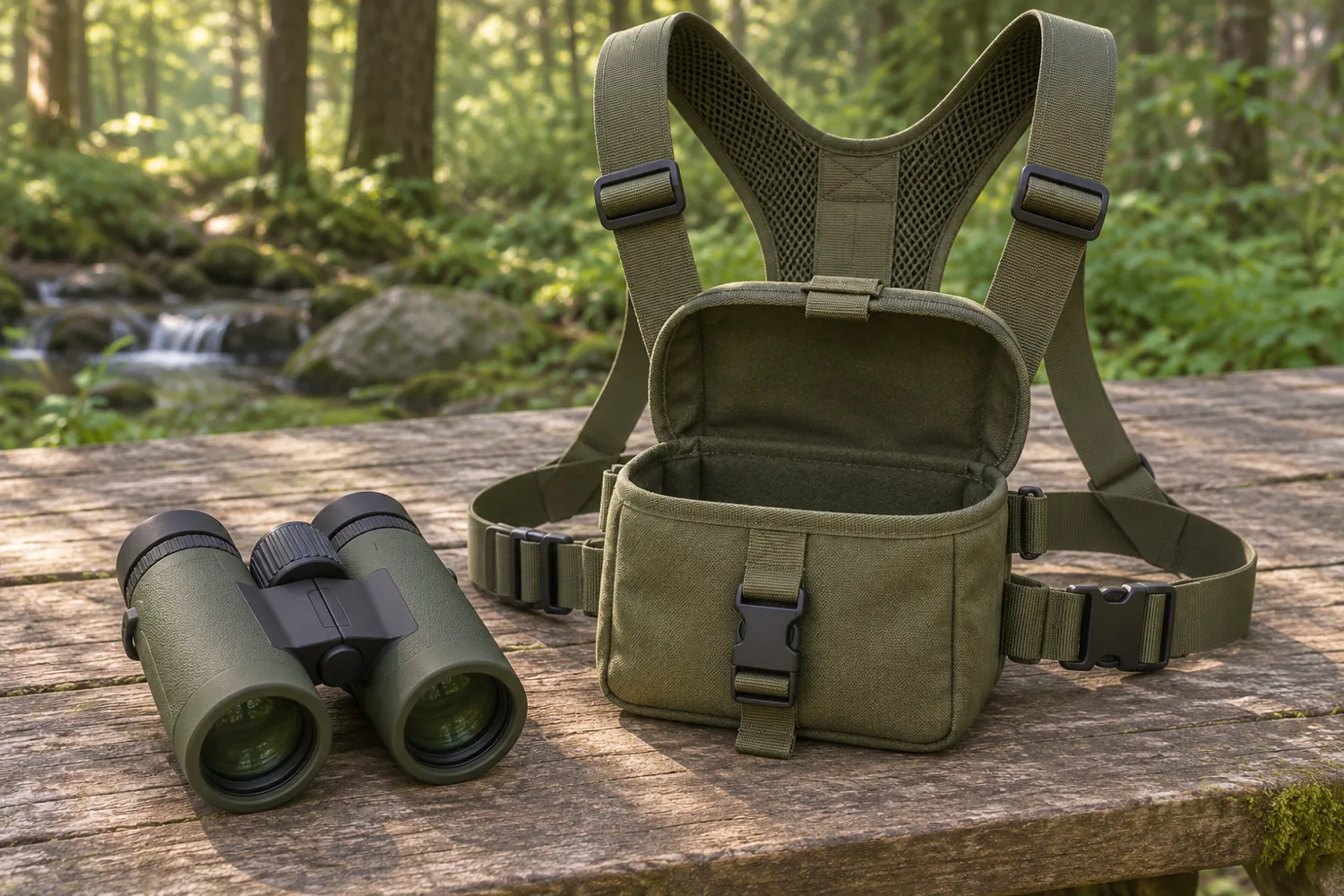
Binocular Chest Harnesses: A Fit and Access Checklist
A binocular chest harness can keep optics close to your body while you walk and make them easier to reach when you stop to observe. Designs range from simple straps to a case with a lid and tethers. Before choosing one, check the fit of both the binoculars and the harness, along with the way you expect to carry your equipment.
There is no universal size based only on the numbers printed on the binocular. A compact 8x42 and another 8x42 may have different body shapes, eyecups or accessories. Badlands publishes interior dimensions and a model-specific fit chart for its own harnesses, illustrating why both the case and the exact optic matter. Use the instructions and measurements for the products you actually own.
Measure the binoculars in their carrying position
Measure the length, width and depth of the binoculars in the position you normally use for storage. Include the eyecups, objective covers, attached strap or any accessory that will remain on the instrument. A body that fits on paper may be difficult to insert if a lid, tether or protruding focus wheel catches at the opening.
Compare those measurements with the manufacturer's stated interior dimensions, not just the exterior size of the case. Some makers publish a compatibility list for specific binocular models. Use it as a starting point and confirm the version you own, because an older or newer model may differ. Ask the case manufacturer if the measurements are close or the fit is uncertain.
Do not force binoculars into a tight case. They should be secure without pressure on the eyecups or controls, and the lid should close as designed. Equally, a case that is much too large may let the instrument shift. Any padding or divider should be used only in the way the case maker recommends.
Check access before an outing
Open the case, remove the binoculars and return them while standing in a safe place. Notice whether the lid can be operated comfortably and whether it obstructs the eyepieces. A design that is easy to reach at home may feel different with a jacket, gloves or a backpack.
Check how the lid is held closed and whether a tether is supplied. Vortex describes adjustable straps and binocular tethers for one of its harness products; those details are specific to that model. Other cases can use different closures or attachment methods. Follow the instructions for yours and check that the lid cannot open unexpectedly during normal movement.
Adjust the harness for your clothing
Set the shoulder and back straps so the case sits comfortably and does not interfere with breathing or movement. Try the fit over the layers you expect to wear. A setting that works over a light shirt may need adjustment over a thicker coat. Avoid pulling straps so tight that they restrict movement or put unnecessary pressure on the instrument.
Walk a short distance and bend carefully to check whether the case swings, rubs or blocks access to other equipment. If you carry a backpack, see how the straps interact. Keep loose strap ends secured as the manufacturer directs so they do not catch on branches or other objects.
Attach tethers to suitable points
Use only attachment points and hardware approved for the binoculars and harness. Inspect buckles, stitching and tether ends before use. A tether is an additional connection, not a reason to leave a case open or disregard the instrument's instructions.
If the harness requires removing an existing neck strap, record how the original strap was fitted and keep the parts together. Our binocular strap attachment checklist covers general points to check. When attachment hardware is missing, damaged or unclear, contact the manufacturer rather than improvising a connection.
Consider weather and care
A fabric case can protect an instrument from some everyday contact, but do not assume it is waterproof. Review the maker's stated weather protection and care instructions. After a damp outing, remove the binoculars and allow both case and optics to dry as their manufacturers recommend. Avoid sealing wet equipment inside a closed bag.
Clean the case only with methods allowed by its maker. Check for dirt around zippers or closures, and inspect straps periodically for fraying. If a buckle is cracked or a seam is coming apart, arrange repair or replacement before relying on it to carry optics.
Make a practical choice
Start with the dimensions and attachment requirements, then compare access, comfort and the way the harness works with your clothing. Product descriptions and sizing charts help narrow the options; a careful fit check with your own binoculars provides useful information a single size label cannot.
Sources: Badlands binocular harness sizing charts and Vortex GlassPak harness product information.
Cover: AI-generated editorial illustration of generic optics equipment.