
Image-Stabilized Binoculars: A Practical Choosing Checklist
A distant bird or a detail on a hillside can be difficult to study when the image moves with your hands. Image-stabilized binoculars are designed to reduce some of that visible shake. They can be useful for handheld observation, but stabilization is only one feature to consider alongside magnification, weight, fit and the manufacturer's operating instructions.
Nikon notes that hand movement becomes more apparent at higher magnification and describes vibration reduction as a way to reduce image shake. That does not mean a stabilized view will be perfectly still in every situation. Movement from a vehicle, wind or the observer's own position can differ from the conditions used in a manufacturer's tests.
What stabilization is meant to do
When binoculars magnify a scene, small movements of the instrument also become more noticeable in the view. A stabilization system is intended to counter part of that movement so the scene appears steadier. The method and its limitations depend on the model. Some systems use power and user controls, so check the product manual for the way your chosen instrument operates.
A steadier view can make it easier to examine a stationary subject, but stabilization does not increase optical magnification or correct an out-of-focus image. Adjust the hinge, eyecups and focus for your eyes first. If the image is uncomfortable or you see two images, stop and review the maker's setup instructions rather than assuming stabilization will fix the problem.
Compare magnification with the full design
A higher number before the multiplication sign indicates greater stated magnification. It can also make a view harder to hold steady without assistance. Compare the actual field of view, objective diameter, close-focus distance and eye relief alongside that number. Two models with the same magnification may differ in size, optical design and comfort.
If you wear glasses, check the published eye relief and try the eyecups in the appropriate position when possible. A specification alone cannot guarantee that the instrument will fit every face. For the basics of a comfortable grip, see our handheld binocular stability checklist.
Check power and controls
For a battery-powered model, look up the recommended battery type, the way batteries are installed and any storage precautions. Nikon's sport optics catalog, for example, lists battery and operating details for specific STABILIZED models. Those details should not be generalized to other manufacturers or models. Cold conditions, use patterns and battery type can affect real operating time.
Locate the stabilization control and read how it is activated. Check whether the product has an automatic shutoff and whether the feature must be held or can remain on. If you expect to use the binoculars on a long outing, carry suitable spare batteries when the manual permits, and protect them as directed. Do not mix batteries or improvise a power source contrary to the manufacturer's instructions.
Think about the setting
For a short walk, consider whether the binoculars are comfortable to hold, carry and focus with gloves. On a boat or moving vehicle, read the model's guidance and keep your own safety ahead of observation. Stabilization is not a substitute for a secure position, appropriate weather protection or a safe route.
At dusk, the apparent steadiness of an image is only part of the experience. Objective size, exit pupil, coatings and ambient light also matter. Our objective lens size guide explains another specification to consider. Avoid making a buying decision from a single number or an unsupported brightness claim.
For astronomy or a long stationary session, a compatible tripod can still be useful even with stabilization. Check the mounting method and the accessory maker's instructions. Never look directly at the sun through binoculars; serious eye injury can result.
Test the view carefully
If a demonstration is available, compare the stabilized and unstabilized view of the same distant stationary subject while safely standing in the same place. Set the eyecups and focus for your eyes, then follow the control instructions. Observe comfort and the effect of the feature rather than relying only on a published percentage. The result may vary by user and situation.
Look at the controls, grip, strap attachment, weight and case as well. If possible, try holding the binoculars for the length of a normal viewing session. A feature that helps in one setting may not outweigh a poor fit or inconvenient handling for your needs.
Before deciding
Confirm the exact model's specifications, power requirements, environmental ratings and service instructions with its manufacturer. Choose a magnification and field of view appropriate for your activity, then consider whether stabilization's added controls and power needs fit your routine.
Sources: Nikon on binocular magnification and vibration reduction and Nikon's sport optics catalog.
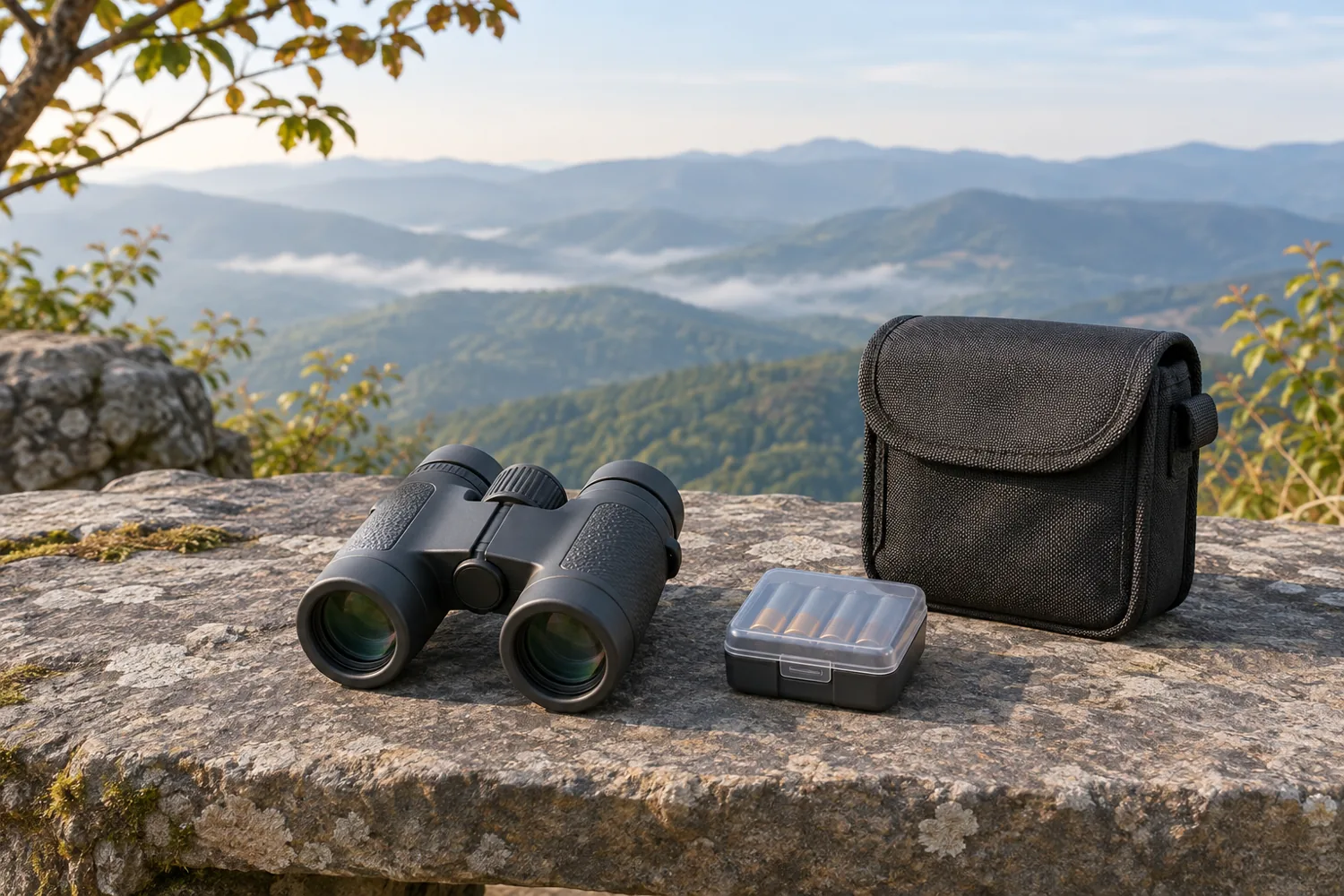
Cover: AI-generated editorial illustration of generic optics equipment.