Binocular Storage After a Damp Outing: A Checklist
Expert Binocular Team
November 9, 2026
5 min read
A birding walk in mist or a cool evening under the stars can leave binoculars damp even when they appear clean. Putting them straight into a closed case may trap moisture around the instrument. A simple routine after returning indoors helps you notice dampness and choose a suitable place to store your optics.
The right care depends on your binoculars and their instructions. Check the manufacturer's guidance for your exact model, especially its water-resistance rating and cleaning materials. Do not dismantle the instrument or attempt to repair internal fogging yourself. If you see persistent moisture inside, damage or a loose part, contact the manufacturer or an authorized service provider.
Start with the outside
Set the binoculars on a stable surface and check the body, strap and caps for water, mud and grit. A wet strap or padded case can hold moisture against a dry-looking instrument, so inspect the accessories separately. Handle the optics carefully and avoid forcing hinges, eyecups or focus controls.
Nikon's binocular precautions advise wiping rain, dew or mist from the body and drying the binoculars before storage, including waterproof models. Follow the directions supplied with your own model. Waterproofing has specific limits, and a general description does not guarantee that every seal remains effective after damage or aging.
If the binoculars were submerged or exposed to salt water, consult the maker's instructions promptly. Different models have different cleaning and service requirements. Do not assume that a routine designed for one waterproof instrument applies to another.
Let the instrument adjust gradually
Moving optics between cold outdoor air and a warm room can cause condensation. Nikon notes that sudden temperature changes can cause moisture to form on internal lens surfaces and recommends allowing affected binoculars to dry naturally. Avoid placing them near a heater or leaving them in direct hot sunlight in an attempt to speed the process.
Give the instrument time in an appropriate indoor location and examine it again before enclosing it. If fog remains visible inside or returns repeatedly, ask the manufacturer or a qualified technician for guidance. Do not open the barrels: doing so can disturb alignment or seals and may make the problem harder to assess.
Temperature changes are not limited to winter. An air-conditioned vehicle, a humid outdoor setting or a cool evening can create conditions in which condensation appears. Plan a little time at the end of the outing to check the equipment instead of packing it away immediately.
Treat lens surfaces gently
Remove loose dust or grit using the method recommended by the binocular manufacturer. Do not rub a lens while abrasive particles remain on it. Lens coatings can be damaged by unsuitable cloths, paper or unnecessary pressure. Use only cleaning materials and solutions approved for your instrument.
Our guide to cleaning binocular lenses covers the basic sequence of removing loose material before dealing with marks. Clean only when needed; a few tiny particles do not necessarily justify repeated wiping. If a mark is persistent or you are unsure what it is, seek qualified advice.
Keep body cleaning separate from lens cleaning. A cloth used on a muddy housing should not automatically be used on the lenses. Check the cloth itself for debris and replace it when it is dirty. Protect caps and eyepieces from grit as well.
Choose a dry storage place
Look for a cool, dry location away from excessive heat, direct sun and dusty areas. Do not leave binoculars in a hot parked car or beside heat-producing equipment. Nikon cautions against both high temperature and humidity during storage.
For longer storage, Celestron's optics care guidance describes using a sealed container or bag with a desiccant before placing equipment in its padded case. Follow the advice for your own model and ensure the optics and case are dry first. A desiccant is not a substitute for removing visible moisture or addressing persistent internal condensation.
Store the case, strap and lens caps only after checking that they are dry. Position the binoculars so they cannot fall and are protected from accidental knocks. Avoid a crowded shelf where heavy objects can press on the body or eyecups.
Inspect again before the next outing
Before packing, look through both barrels in normal daylight and check the outside for moisture, damage or dirt. Verify that the focus mechanism and eyecups move as described in the manual without being forced. Check the strap attachment and close the case securely for travel.
If you notice an unusual double image, a loose part, persistent internal haze or signs of mold, avoid improvising a repair. Record the symptoms and contact an authorized service provider. The field kit checklist can help you organize the accessories you take along.
Frequently asked questions
Can I put damp binoculars straight into their case?
First follow the manufacturer's drying instructions and check the binoculars and case for moisture. A closed damp case can retain moisture.
Should I use heat to clear fog inside?
Avoid improvised heating. Follow the maker's guidance for gradual drying and seek service if internal fog persists.
Does waterproof mean maintenance is unnecessary?
No. Ratings and care procedures vary by model. Inspect the instrument after use and follow its manufacturer's instructions.
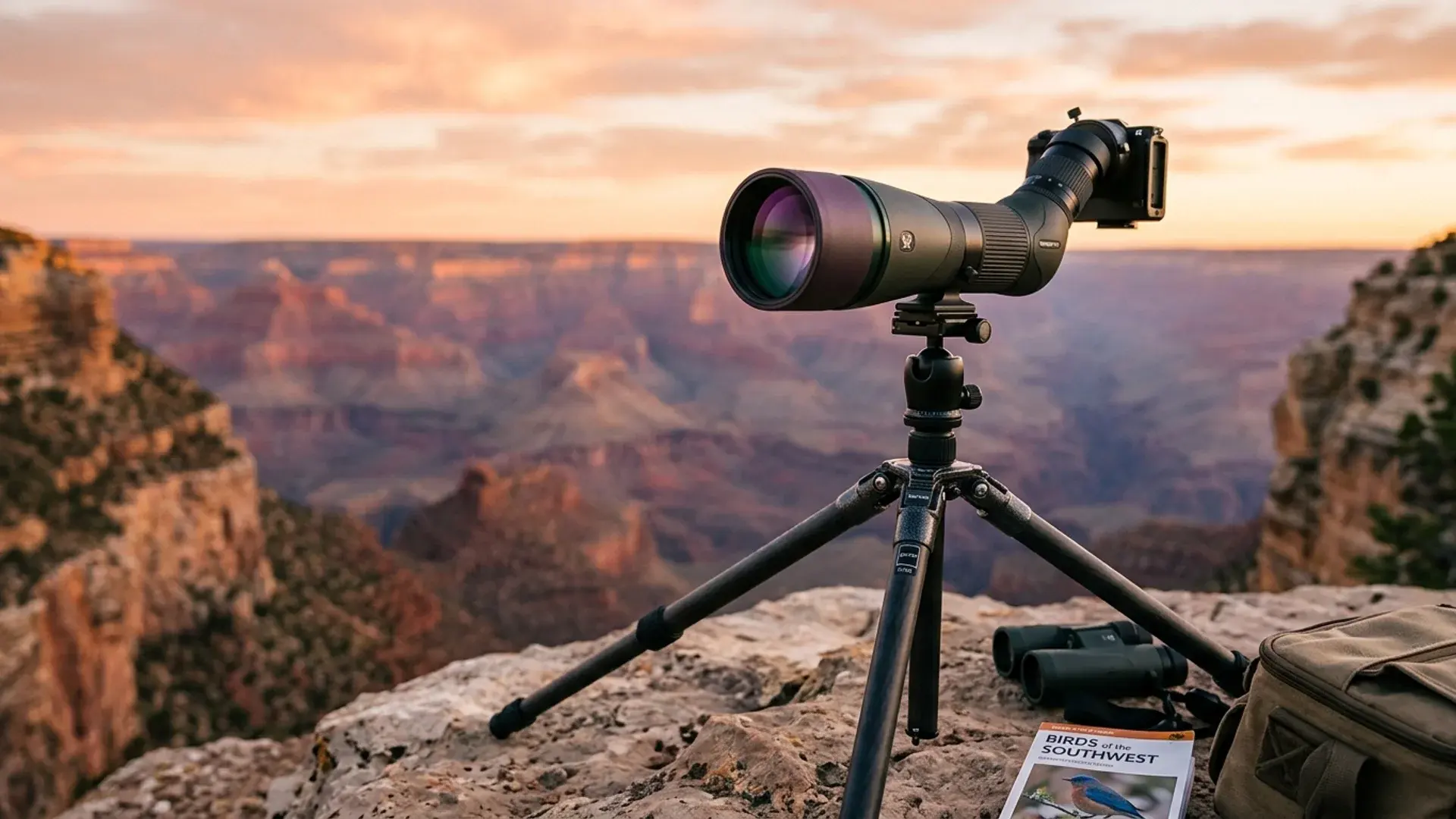
Cover: AI-generated editorial illustration of generic binoculars and storage accessories, not a product photograph.